

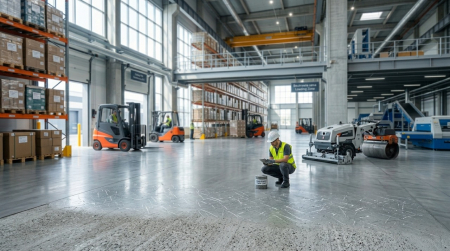
Fiber-reinforced concrete for industrial floors: advantages and applications
Industrial floors are exposed to high loads every day. The surface is affected by heavy machinery, warehouse equipment, vibrations, and constant vehicle traffic. Over time, ordinary concrete begins to crack, generate dust, and lose its strength. That is why fiber-reinforced concrete is increasingly used in industrial construction.
Adding fiber to the concrete mix helps increase the strength of the coating, reduce the risk of cracks, and extend the service life of the floor without complex additional reinforcement.
What Is Fiber-Reinforced Concrete
Fiber-reinforced concrete is a concrete mix that contains reinforcing fibers. These fibers are evenly distributed throughout the entire volume of the mix and strengthen the concrete structure.
Fiber performs several functions at once:
- reduces the likelihood of shrinkage cracks;
- improves resistance to loads;
- enhances wear resistance of the coating;
- reduces the risk of edge and surface damage.
Polymer fiber or macrofiber is most commonly used for industrial floors. This material helps create a stronger and more durable concrete base.
Why Industrial Floors Need Reinforcement
Industrial concrete coatings are used much more intensively than ordinary floors in residential or commercial premises. The base is constantly exposed to mechanical loads, temperature fluctuations, vibrations, and the impact of heavy machinery. Without additional reinforcement, concrete gradually loses strength, leading to defects and the need for repairs.
That is why special attention is paid to strengthening concrete structures when installing modern industrial floors. One of the most effective solutions is reinforcing concrete with fiber, which helps increase the reliability of the coating throughout the entire thickness of the layer.
High Loads on Concrete Coatings
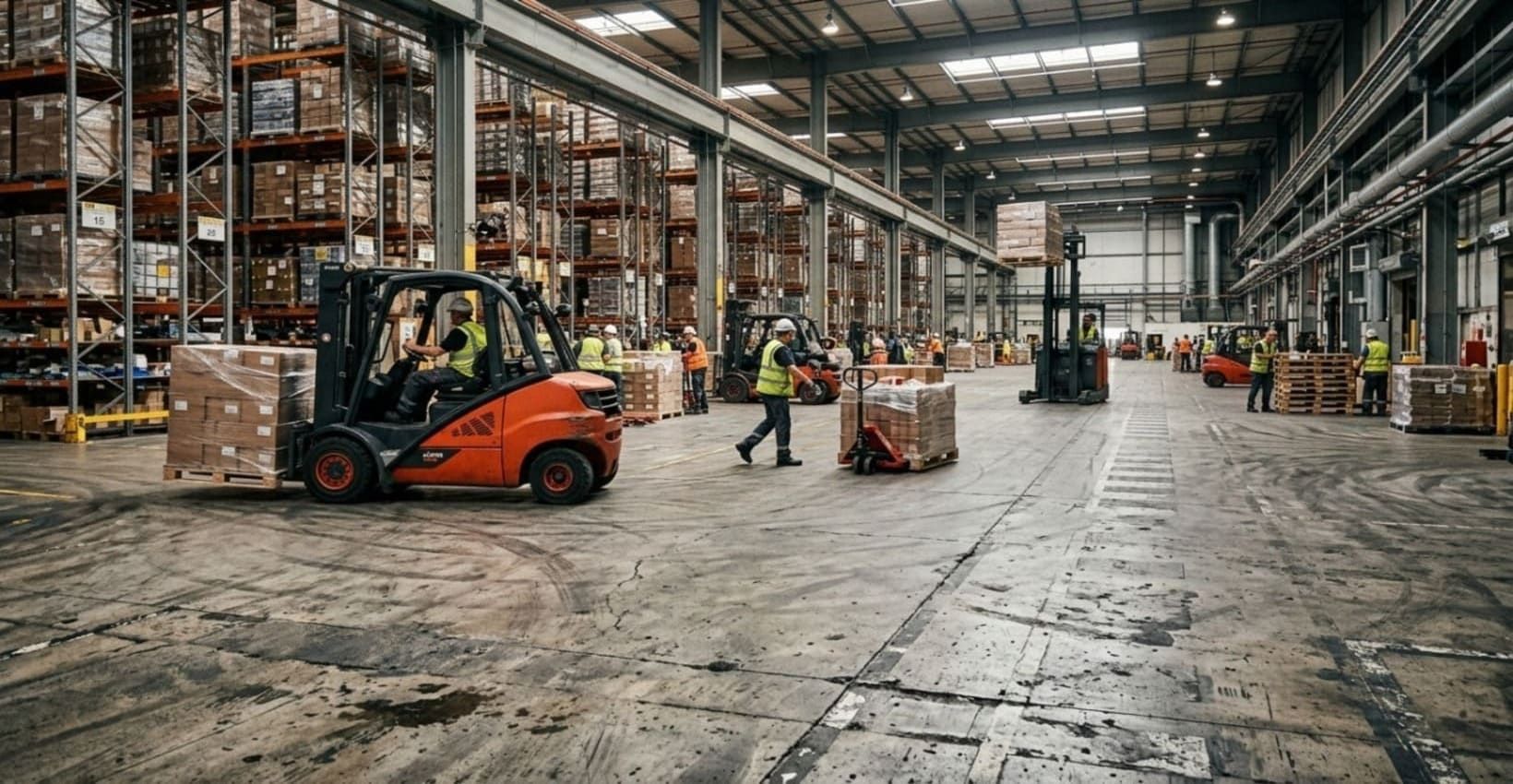
Industrial floors operate under difficult conditions. This is especially relevant for:
- warehouses;
- logistics centers;
- production facilities;
- parking garages;
- retail facilities.
Concrete is constantly exposed to:
- forklifts;
- racking systems;
- equipment vibrations;
- intensive vehicle traffic.
Additional stress is created by impact loads, heavy equipment weight, and continuous operation of the coating without long breaks. Under such conditions, ordinary concrete without reinforcement wears out faster and begins to deteriorate.
Main Problems of Standard Concrete
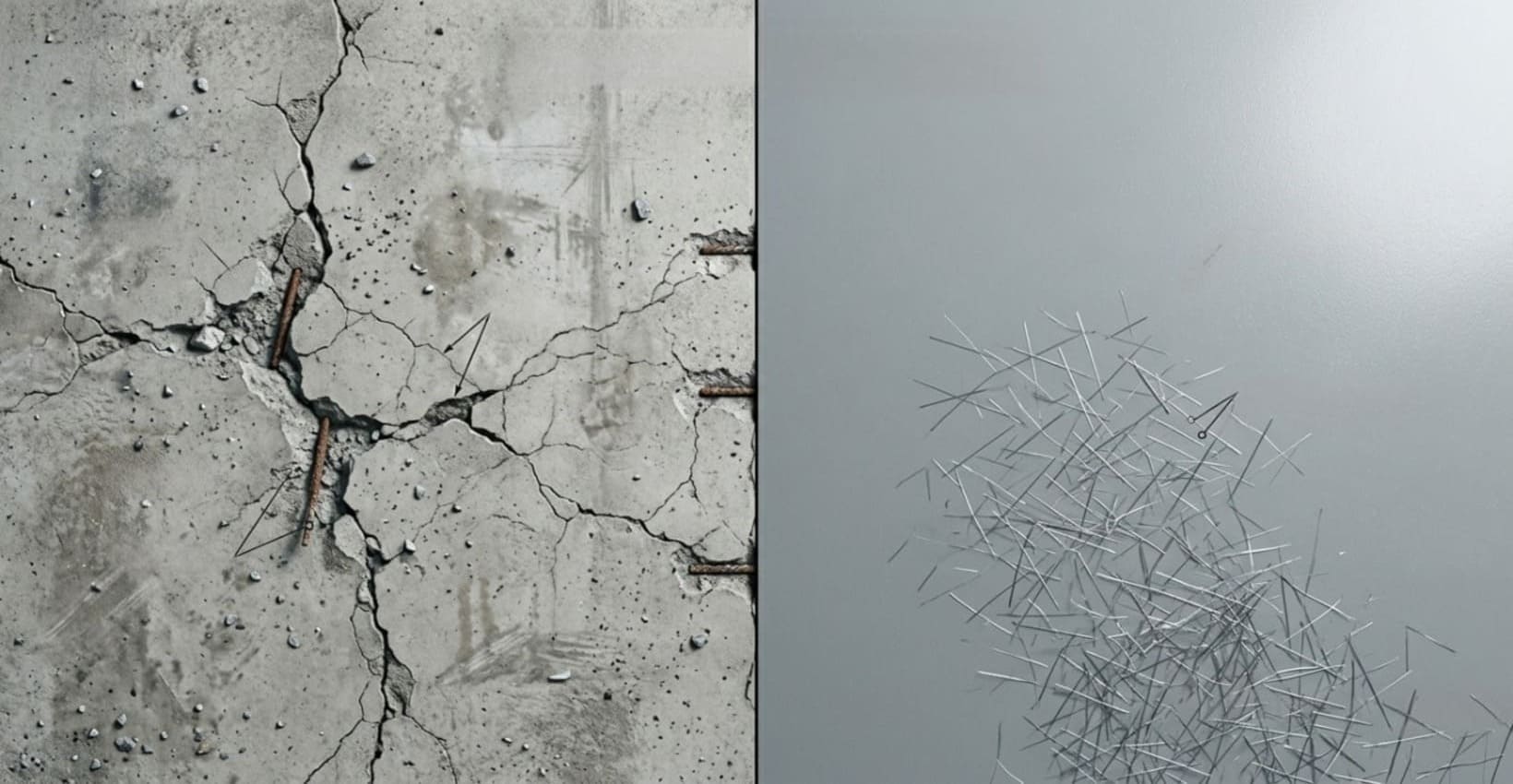
Even high-quality concrete mixes can lose their properties over time. The most common problems include:
- shrinkage cracks;
- surface abrasion;
- dust formation;
- chips and edge damage;
- reduced load-bearing capacity of the coating.
Defects appear especially quickly in cases of improper reinforcement or high operational loads. With constant movement of machinery, damage gradually increases, and the surface begins to require frequent repairs and maintenance.
Advantages of Fiber-Reinforced Concrete for Industrial Floors
Fiber-reinforced concrete is actively used in the construction of industrial facilities due to its high strength and resistance to loads. Adding fiber improves the characteristics of the concrete mix and increases the reliability of the coating without complex additional structures.
This solution is especially in demand at facilities where it is important to minimize the risk of floor damage and reduce future maintenance costs.
Increased Strength and Crack Resistance
Fiber reinforces concrete throughout its entire volume, not just in отдельных areas. As a result, the risk of microcracks and internal damage is reduced.
Reinforcing concrete with fiber helps make the coating more resistant to deformation, dynamic loads, and mechanical impact. This is especially important for floors exposed to intensive daily use.
Due to the uniform distribution of fibers, the concrete structure becomes more stable and retains its characteristics better over a long period of time.
Resistance to Loads and Wear
Industrial floors with fiber better withstand:
- heavy machinery traffic;
- impact loads;
- constant mechanical stress;
- equipment vibrations.
The surface wears out more slowly and maintains its operational properties for a longer time. This is especially important for warehouses, production facilities, and logistics centers where the coating is used almost continuously.
Reduced Risk of Concrete Shrinkage
During curing, concrete may shrink. It is during this period that the first cracks often appear.
Fiber holds the structure of the mix together and reduces internal stress in the concrete, helping minimize the risk of damage. As a result, the surface remains more even and resistant to further loads.
Time Savings During Reinforcement
The use of fiber helps reduce the time required to complete the work. There is no need to spend additional resources on installing metal mesh or complex reinforcement frameworks.
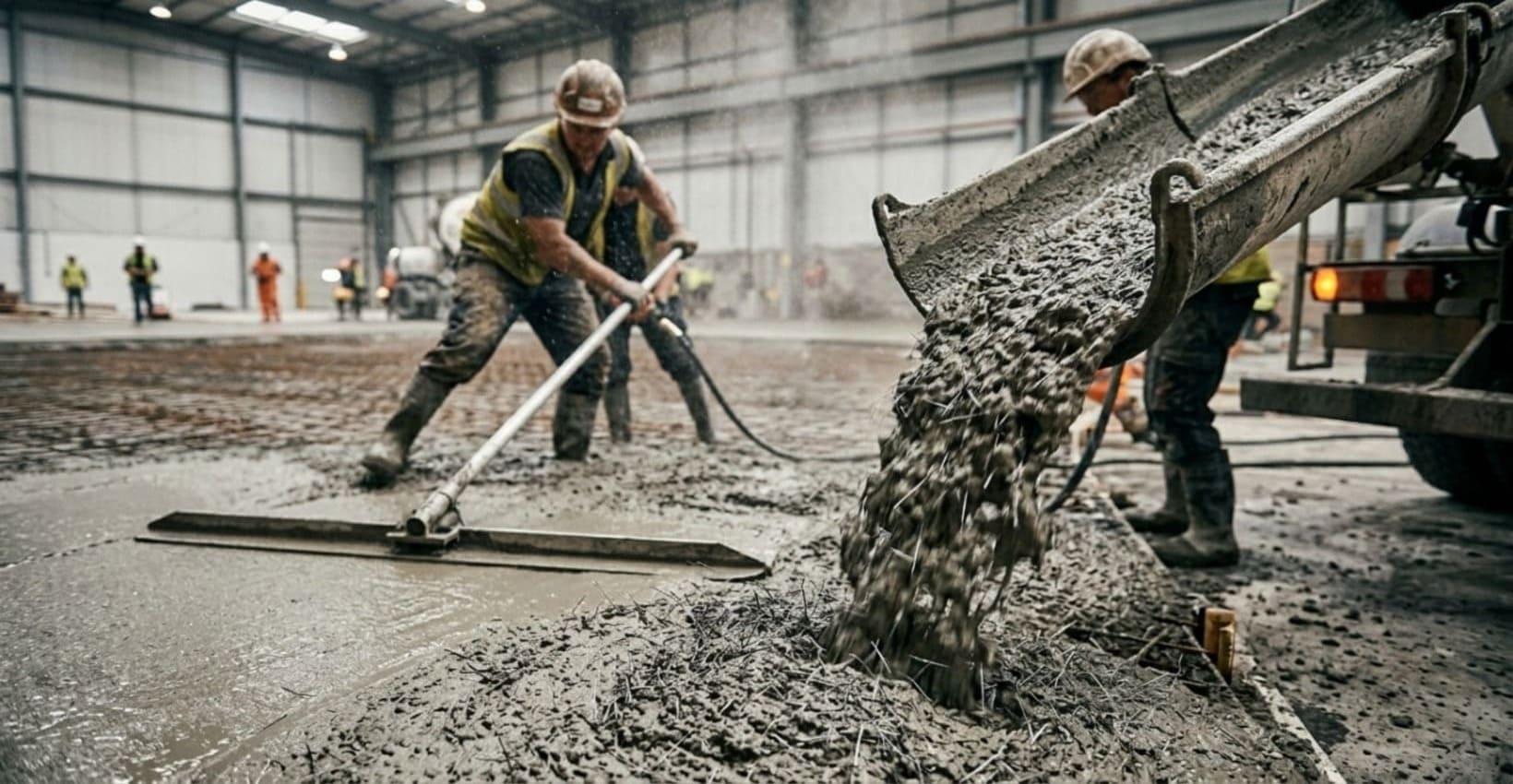
Fiber is added directly to the concrete mix, simplifying the installation process of industrial floors and speeding up construction work.
Durability of Industrial Floors
Fiber-reinforced concrete features high wear resistance and a longer service life. This is especially important for facilities with intensive use.
High-quality reinforcement reduces future repair and maintenance costs. When installation technology is followed correctly, industrial floors retain their properties even under constant loads.
Where Fiber-Reinforced Concrete Is Used
Fiber-reinforced concrete is widely used in the construction of:
- warehouses;
- production facilities;
- logistics complexes;
- shopping centers;
- parking garages;
- hangars;
- auto repair shops;
- agricultural facilities.
Such coatings are suitable for premises with high mechanical loads and intensive machinery traffic. Fiber-reinforced concrete is also used at facilities where it is important to ensure floor durability and minimize the risk of cracks.
Can Fiber Replace Reinforcing Mesh
In many cases, fiber can indeed be used instead of metal mesh. This is especially relevant for industrial floors, concrete площадки, and screeds.
Advantages of this solution include:
- more uniform reinforcement;
- faster construction work;
- reduced labor costs;
- no metal corrosion;
- reduced risk of installation errors.
However, the choice of reinforcement type depends on:
- the thickness of the concrete layer;
- expected loads;
- operating conditions;
- project specifications.
At facilities with increased requirements, combined reinforcement is sometimes used. The final decision is made based on calculations and technical requirements for the coating.
Features of Installing Industrial Floors with Fiber-Reinforced Concrete
The quality of an industrial floor depends not only on the materials used but also on compliance with installation technology. Even durable fiber-reinforced concrete requires proper base preparation and adherence to all stages of the work.
Only with professional installation can a durable coating resistant to intensive loads and mechanical impact be achieved.
Base Preparation
Before pouring concrete, the base must be properly prepared:
- perform compaction;
- create a level surface;
- ensure proper waterproofing if necessary.
Mistakes at this stage can lead to floor deformation, base settlement, and future cracks.
Adding Fiber to Concrete
Fiber must be evenly distributed throughout the mix. To achieve this, it is important to follow:
- the correct dosage;
- the proper sequence of addition;
- the required mixing time.
Violating the technology may reduce the effectiveness of reinforcement and worsen the characteristics of the concrete coating.
Pouring and Surface Maintenance
After installation, the concrete must be:
- leveled;
- protected from rapid drying;
- provided with proper curing conditions.
Following the technology allows for a strong and durable industrial floor resistant to high operational loads.
Modern materials make it possible to reduce construction time and increase the reliability of concrete structures. With the correct fiber selection and proper installation technology, industrial floors retain their characteristics even under intensive use.
For reinforcing concrete floors and construction structures, you can use Macrofiber PolyMesh — a modern polymer macrofiber for strengthening concrete and increasing the durability of coatings.