


The role of concrete in construction and infrastructure
Concrete is one of the most important construction materials used in modern building engineering. Its popularity results from high durability, resistance to loads, and a wide range of applications. Depending on project requirements, different concrete mixes can be used, which vary in technical parameters, composition, and purpose. As a result, concrete is used both in residential construction and in large infrastructure investments.
Use of concrete in construction and infrastructure
The modern application of concrete covers virtually all stages of construction projects. This material forms the basis of load-bearing structures such as foundations, walls, floors, and reinforced concrete elements. Concrete is also used in the construction of roads, bridges, parking lots, and industrial facilities.
Due to its technical properties, structural concrete ensures structural stability and resistance to external factors such as moisture, frost, and heavy mechanical loads.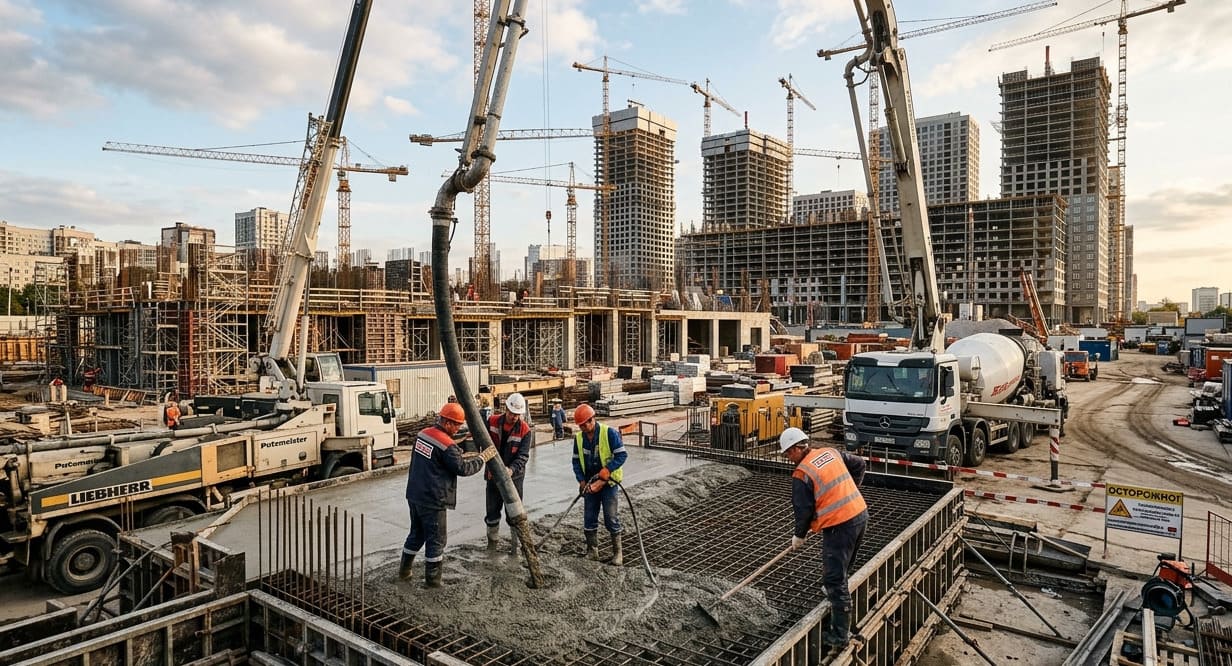
Main types of concrete and their characteristics
Structural concrete
Structural concrete is used in load-bearing building elements. It is characterized by high compressive strength and structural stability. It is a fundamental material in the construction of foundations, columns, and floors.
Ready-mix concrete
Ready-mix concrete is a pre-prepared concrete mixture produced in batching plants and delivered directly to the construction site. Its composition is precisely controlled, ensuring consistent quality parameters and high durability of finished elements.
Specialized concrete
Specialized concrete is used in conditions requiring enhanced resistance. It can be modified with chemical additives that increase its resistance to water, frost, and mechanical damage.
- concrete resistant to low temperatures
- waterproof concrete
- high-strength concrete
- rapid-setting concrete
Modern solutions: reinforcing fibers in concrete
In modern construction, reinforcing fibers, known as concrete fibers, are increasingly used. This is an additive that significantly improves the mechanical properties of the concrete mix and increases its resistance to cracking and micro-damage.
The use of dispersed fibers in concrete allows for better distribution of stresses within the material structure, which results in greater durability and extended service life of structures. In many cases, fiber reinforcement of concrete can reduce the need for traditional steel reinforcement.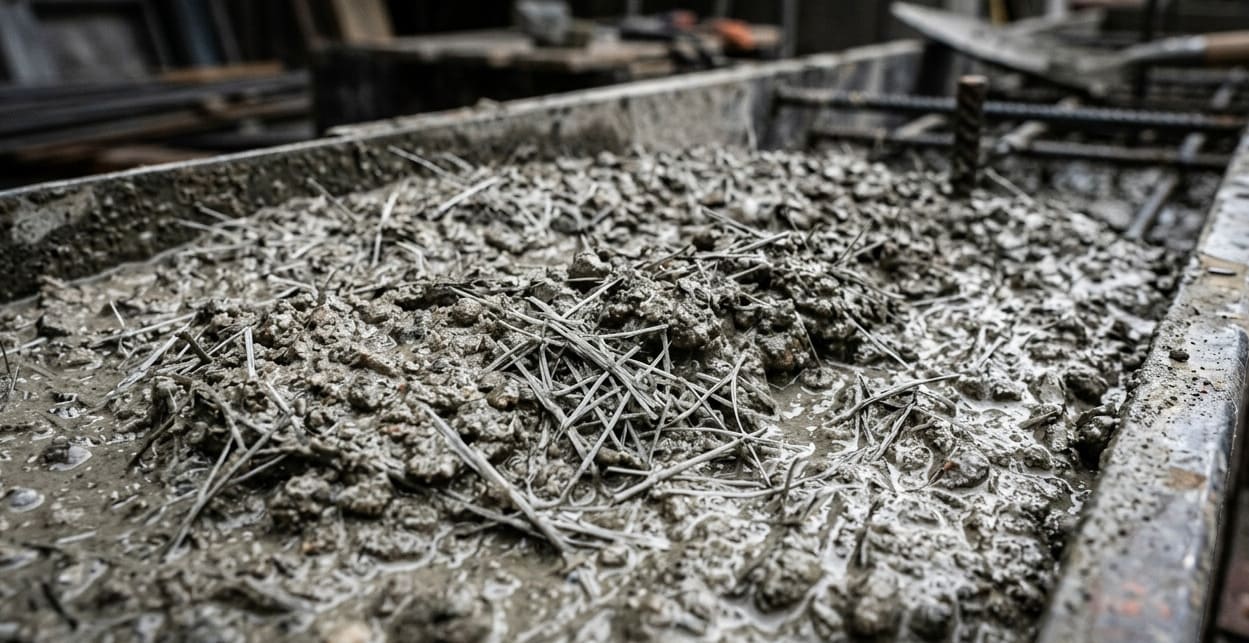
Concrete in road and industrial investments
Concrete plays a key role in infrastructure development. It is used in the construction of roads, highways, bridges, tunnels, and large industrial facilities. Thanks to its strength and stability, this material allows for the creation of structures with a very long service life.
In infrastructure, resistance to changing weather conditions and intensive use is particularly important. Therefore, concrete mixes with enhanced technical parameters are often used, enriched with additives such as polypropylene or steel fibers.
Main advantages of using concrete
Concrete remains one of the most commonly chosen construction materials due to its functional and technical properties.
- high resistance to mechanical loads
- long service life of structures
- resistance to weather conditions
- wide range of applications
- possibility of modifying concrete mix composition
- compatibility with reinforcing additives such as fibers
Summary of concrete applications in practice
In construction practice, concrete is used at every stage of an investment — from foundations, through structural elements, to surface finishing. The key factor is a properly selected concrete mix, which affects the durability and safety of the entire structure.
Modern technologies, such as the use of reinforcing fibers, significantly improve concrete parameters and adapt it to the requirements of contemporary construction. This makes it possible to implement increasingly advanced infrastructure and industrial projects.
Recommended products
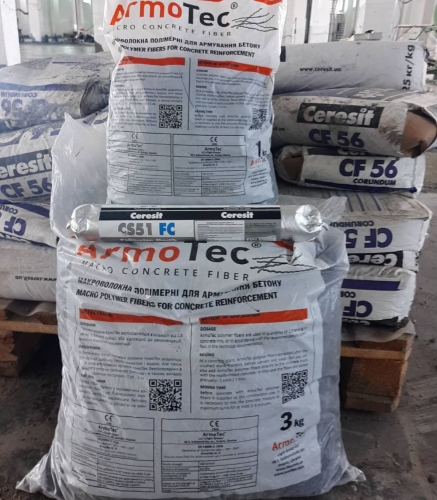 | 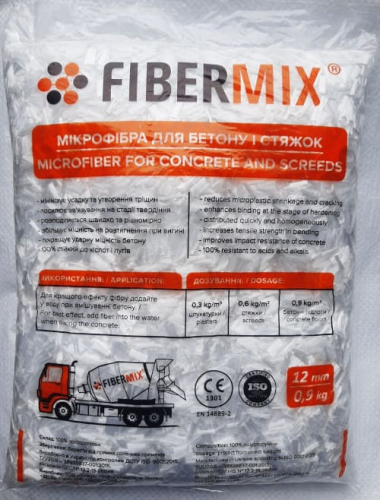 |
| Armotec Fibre | Fibermix Microfiber |